Is a Psychology Today Profile Enough to Grow Your Private Practice?
Jul 07, 2026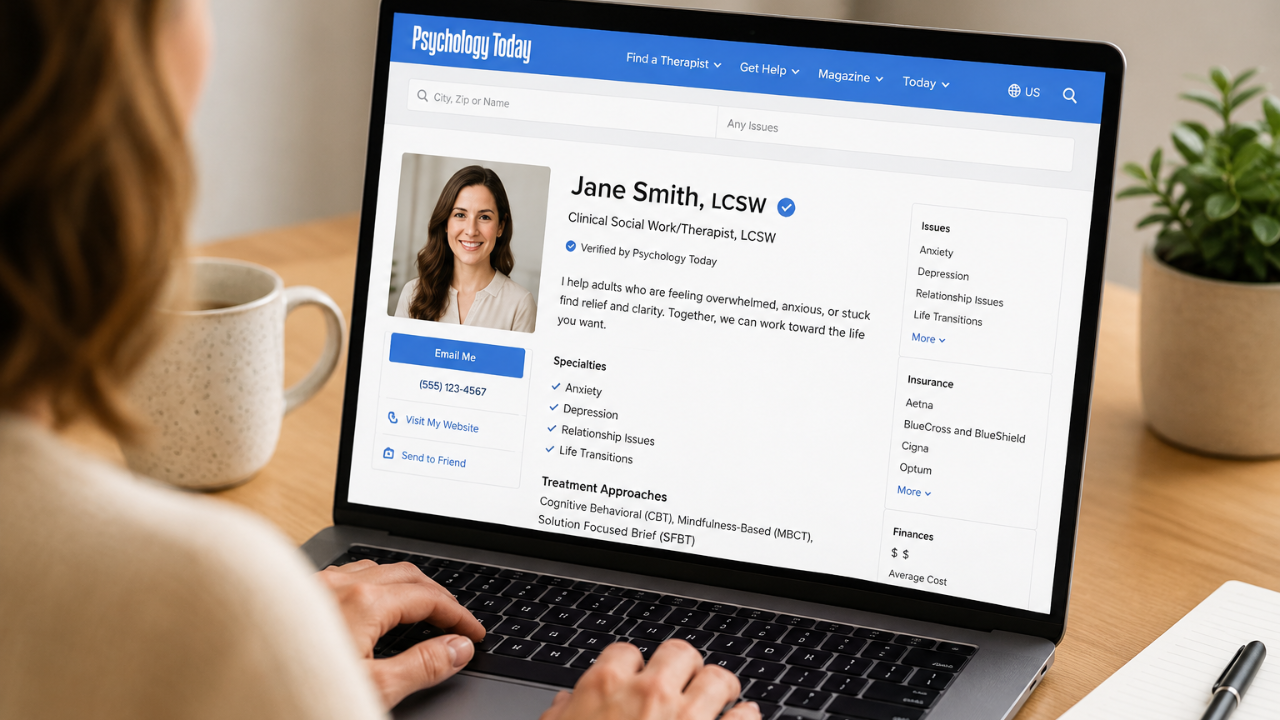
If you've recently started a private practice—or you've been in practice for years—there's a good chance you have a Psychology Today profile. It's one of the most recognized therapist directories in the country and often one of the first marketing investments clinicians make.
But many therapists wonder:
"Is having a Psychology Today profile enough to consistently attract new clients?"
The short answer is no. However, that doesn't mean it isn't valuable.
A Psychology Today profile can be an excellent referral source, but like any marketing tool, its effectiveness depends on how it's used and how it fits into your overall online presence.
What Is Psychology Today?
Psychology Today is one of the largest online directories for mental health professionals. Millions of people visit the platform each year to search for therapists based on specialty, location, insurance accepted, treatment approach, and other factors.
For clients, it offers an easy way to compare providers.
For therapists, it provides an opportunity to introduce themselves to people who are actively seeking mental health services.
Simply put, it's a place where therapists and potential clients can find each other.
Why Therapists Should Have a Psychology Today Profile
For many private practice owners, a Psychology Today profile is well worth the investment.
Some of the benefits include:
-
Increased visibility to people actively searching for therapy.
-
The ability to showcase your specialties and treatment approaches.
-
A trusted platform that many clients already recognize.
-
An opportunity to highlight insurance participation, telehealth services, and office locations.
-
A simple way for potential clients to contact your practice.
For therapists who are building their practice, it can be an important source of referrals.
However, it's important to understand what a Psychology Today profile can—and cannot—do.
What a Psychology Today Profile Can't Do
A common misconception is that once a profile is published, the marketing work is finished.
In reality, your profile is just one piece of your digital presence.
A Psychology Today profile alone cannot:
-
Help your website rank higher in Google searches.
-
Improve your visibility in Google Maps.
-
Increase your Google reviews.
-
Build your practice's online authority.
-
Help you appear in AI-powered search results.
-
Replace an optimized website or local SEO strategy.
Think of your profile as a digital introduction—not your complete marketing plan.
How Potential Clients Find Therapists Today
Many therapists assume clients begin their search on Psychology Today.
Some do.
But many start somewhere else.
They open Google and search for phrases like:
-
Anxiety therapist near me
-
Marriage counselor in Tulsa
-
EMDR therapist accepting Blue Cross
-
Child therapist in Orlando
-
Christian counselor near me
Others ask AI tools for recommendations or search through their insurance provider's directory.
By the time a client reaches your Psychology Today profile, they've often already visited multiple websites and compared several therapists.
That's why consistency across your online presence matters.
How to Optimize Your Psychology Today Profile
Creating a profile is only the first step. An optimized profile is much more likely to capture a potential client's attention.
Speak to Your Ideal Client
Many therapist profiles list every issue they treat.
Instead, write as though you're speaking directly to the person you most want to help.
Describe the challenges they may be experiencing, the goals they hope to achieve, and how your approach can support them.
Clients connect with language that feels personal and relatable.
Choose a Professional Photo
Your headshot is often the first thing someone notices.
Use a current, high-quality photo that reflects warmth, professionalism, and approachability.
Small details like lighting, background, and facial expression can influence a client's first impression.
Clearly Define Your Specialty
While it's tempting to market yourself as someone who treats everything, specificity often helps clients feel more confident that you've worked with concerns similar to theirs.
Whether your focus is trauma, anxiety, couples counseling, ADHD, grief, or perinatal mental health, make your expertise easy to identify.
Keep Your Information Current
Review your profile regularly to ensure your:
-
Insurance information is accurate.
-
Contact information is current.
-
Office location is correct.
-
Telehealth availability is updated.
-
Areas of specialty reflect your current practice.
An outdated profile can create frustration and reduce trust before a client ever contacts you.
Common Mistakes Therapists Make
Even experienced clinicians sometimes overlook simple improvements that could strengthen their profile.
Some of the most common mistakes include:
-
Using overly clinical or technical language.
-
Writing a biography that focuses more on credentials than client needs.
-
Uploading an outdated or low-quality photo.
-
Listing too many specialties without a clear focus.
-
Forgetting to update insurance participation or availability.
-
Treating the profile as a one-time task rather than reviewing it periodically.
A few thoughtful updates can make your profile more engaging and easier for potential clients to understand.
Think Like a Client
Imagine you've decided it's finally time to seek therapy.
You search online and find three therapists who appear qualified.
What helps you decide?
Most people aren't comparing licenses or years of experience.
They're asking themselves questions like:
-
Do I feel understood?
-
Does this therapist seem approachable?
-
Do they specialize in what I'm experiencing?
-
Can I picture myself talking with this person?
Your Psychology Today profile should answer those questions before a client ever reaches out.
Your Online Presence Works Together
A Psychology Today profile shouldn't exist in isolation.
Potential clients often visit several places before making a decision, including your website, Google Business Profile, online reviews, insurance directories, and social media accounts.
Each interaction contributes to the overall impression of your practice.
When your information is consistent across every platform, it builds credibility and makes it easier for clients to trust your practice.
A Psychology Today profile remains one of the most valuable marketing tools available to therapists. It provides visibility, credibility, and access to people who are actively looking for mental health services.
However, it's best viewed as one component of a larger online presence rather than a complete marketing strategy.
Take a few minutes to review your profile and ask yourself:
-
Does it clearly describe who I help?
-
Is my photo professional and welcoming?
-
Are my specialties easy to understand?
-
Is my information accurate and up to date?
-
Would someone feel confident contacting me after reading it?
Small improvements can make a meaningful difference over time.
At the end of the day, marketing isn't about convincing people to choose you.
It's about helping the people who already need your expertise find you, understand how you can help, and feel comfortable taking that first step toward therapy.
Is Your Psychology Today Profile Working for You?
We'll professionally review and optimize your Psychology Today profile to help you make a stronger first impression and connect with more of your ideal clients.
Get My Profile Optimized > https://www.therapistconsultants.com/offers/LoSxrYJf/checkout
Stay connected with news and updates!
Join our mailing list to receive the latest news and updates from our team.
Don't worry, your information will not be shared.